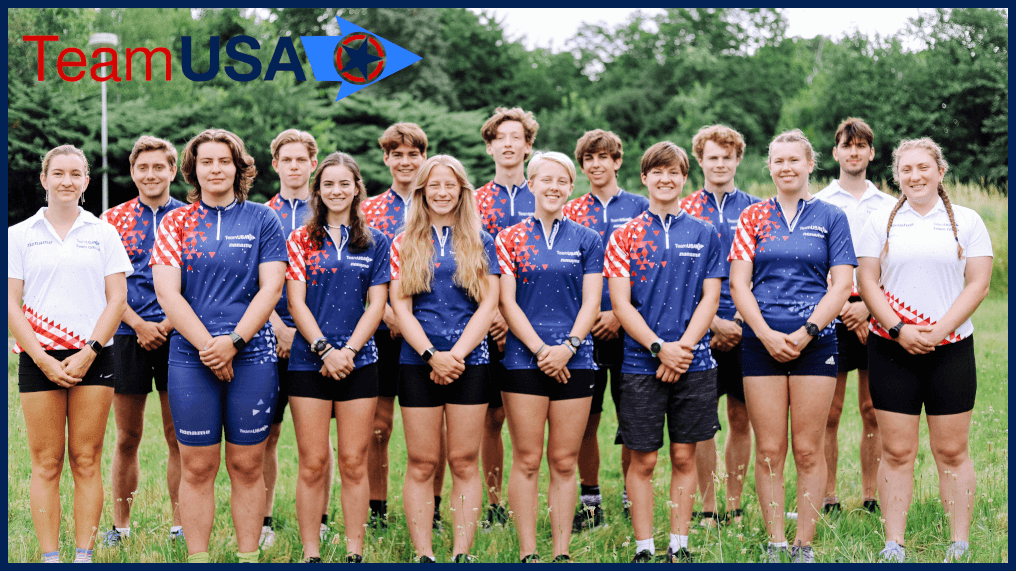
U.S. Senior Team: Member Bios


2013 Senior Team Members


Women

Men

Alison CrockerEric Bone
Samantha SaegerRoss Smith
Hannah CulbergBoris Granovskiy
Alex JospeWyatt Riley
Alison CampbellBrendan Shields
Cristina LuisKen Walker, Jr
 James (Clem) McGrath
 Giacomo Barbone
 Sergei Zhyk
 Ethan Childs

Women

Alison Crocker

Home: Toledo, Ohio
Year of birth: 1984
Occupation: Astrophysics post-doc
Club: Cambridge Sports Union
International experience: WOC 2010-2012, Ski-WOC 2011 and 2013

Do you have any prerace rituals?

Not too dedicated ones. I run for about 10 minutes and do a set of warm-up drills. Mentally, I think about what the terrain will be like, what choices the course setter might have put on the course given the terrain, stuff like that. But I’m now convinced that for long races, I need the during-race ritual of taking water and energy gel, which I hadn’t really done before this year. It really helps after about an hour in, and definitely if the race is longer than 90 minutes.

Samantha Saeger

Home: Uppsala, Sweden

Year of birth: 1982

Occupation: Former teacher

Club: New England Orienteering Club, OK Linné

International experience: JWOC 1992-2002, WUOC 2006, 2008, WOC 2005-12


How did you get into orienteering?

I started orienteering with my family when I was quite young. My parents used to have to drag me and my sister to local orienteering events. I enjoyed going to A-meets more because then I could hang out with my friends. When I was about 10 I went out on my first white course alone at an A-meet. I won a gold calculator, which I still own.

What do you currently do in your training that are keys to your success?

My training is actually quite different this year. I moved to Sweden at the end of last summer and a much higher percentage of my training is actual orienteering. In the past, I spent more of my training hours doing physical workouts on hard surfaces, like roads and tracks. Now almost all of my training is done in terrain or on trails. Will this be the key to my success? I’m not sure yet :) Now that the spring season is fast approaching, I’m trying to get more of a balance between my technical trainings and my physical trainings.


Hannah Culberg

Home: Washington
Year of Birth: 1990
Occupation:
Club: Cascade Orienteering Club
International Experience: JWOC 2010, WUOC 2010, WOC 2011-12


How did you get into orienteering?

I started racing with the West Point team in 2008. I wasn’t very good starting out, and I owe a pretty big debt  to MAJs Jon and Victoria Campbell for all their coaching and weekend O expeditions that year. Somewhere along the line, I decided I really loved this stuff, and started training more seriously.

Do you have any prerace rituals?

I prefer to warm-up with a map whenever I can - events with warm-up maps are great. If not, I try to bring some map along that I can look at while I jog around, just to get my mind into the right state for racing.


Alexandra Jospe

Home: Newton, Massachusetts
Year of birth: 1984
Occupation: Regional GIS Analyst at The Nature Conservancy
Club: Cambridge Sports Union
International experience: WOC 2011-12, SkiO WC 2012#1, Ski-WOC 2013


How do you contribute to orienteering in general?

I try to give back to orienteering as much as I feasibly can, because I recognize how much other people do in order for me to compete. I do a lot of control pick-up at local meets, and am directing two meets for NEOC this year, setting two sprints for CSU, as well as vetting and setting courses for the Western MA 5-day events. Beyond the competitive side of things, I try to expose my junior skiers to as much orienteering as possible, and that is truly rewarding to see how much they enjoy it!

What advice would you give to aspiring athletes?

Orienteering is a physical sport, and to be good at it, you have to be fast and strong as well as smart. Even if you can't get into the forest, keep training on the roads - volume matters, and so does quality. If you're super crunched for time, focus on the quality work.


Alison Campbell

Home: Philadelphia, Pennsylvania
Year of birth: 1991
Occupation: Engineering student
Club: Delaware Valley Orienteering Association, EUOC
International experience: JWOC 2009-2011, WUOC 2010 and 2012

What do you currently do in your training that are keys to your success?

Having moved to Edinburgh I have gotten to join a very active student club and therefore have had access to more training opportunities in university than I might otherwise have had. Also from being in the UK, I have been able to get on many maps of varying terrain. At first they were very challenging for me; however because of that I was forced to really look at how I orienteer and what my strong points are. That reflection has really boosted my confidence and i have been able to focus on my weaknesses. Over the last year or so I have also focused on my physical fitness a lot more, and trying to just get some consistency and quality training in. But mostly I have learned that I enjoy orienteering, I enjoy being out in the woods challenging myself and that my best runs are when I go out and just enjoy doing what I love.

What advice would you give to aspiring athletes?

My advice would be get on as many maps as possible and as different as possible. Also make sure you have a strong physical fitness base. Then it is all about consistency and process!


Cristina Luis

Home: Sudbury, Massachusetts / Oslo, Norway
Year of birth: 1979
Occupation: Teacher, math and science
Club: Nydalens SK
International experience: World Cup 2007, WOC 2009


How did you get into orienteering?

I’ve always been really into maps, but unfortunately I didn’t get out to a real orienteering course until my senior year of college. The Rochester Orienteering Club dropped a stack of brochures off for the Outdoors Club, and I went with a small group to a local meet. I was hooked, though it took a few years before I realized how much was out there and how much I could do with the sport.


Men

Eric Bone

Home: Seattle, Washington
Year of birth: 1974
Occupation: Owner, MerGeo
Club: Cascade Orienteering Club
International experience: JWOC 1994; WOC 1995, '97, '99, '01, '03, '05-'10, 2012

What do you currently do in your training that are keys to your success?

I’m focusing mostly on my aerobic base training this year. I have always had a fairly high VO2max relative to my aerobic capacity, so I thought I would try emphasizing aerobic training, even if that means not quite as much strength training or as many intervals. Whether this will lead to success is yet to be seen, but I was pretty satisfied with my fitness at the U.S. Champs and Team Trials in Georgia.

What advice would you give to aspiring athletes?

Training works. If you have the passion and discipline to keep working at something consistently for some years--even if it is hard or if there are bumps and set-backs--you will reap the rewards in not only improved performance, but also in finding new enjoyment of the sport.


Ross SmithRoss Smith

Home: Uppsala, Sweden
Year of birth: 1983
Occupation: Researcher
Club: Cambridge Sports Union, New England Orienteering Club, OK Linné
International experience: JWOC 1999-2003, WOC 2008-2011

What do you currently do in your training that are keys to your success?

Currently, I have made a drastic change in my training, by moving with my fiancee, Samantha, to Sweden. We chose to move to Uppsala in the summer of 2011 because we wanted to train with the local club, OK Linné, and because it would be easier to orienteer more if we lived in Scandinavia. We do a lot of training with the club here which is contributing to any success I have as an athlete, including weekly gym workouts, interval session, and night orienteering. But most important is the great focus on doing lots of orienteering, and we get out onto maps many days a week (2-7).

What advice would you give to aspiring athletes?

My advice to aspiring athletes is pretty much the same as it was last year, namely train with other people to help you stay motivated. If you need a good group of people to train with, move (or just visit) to Boston and join one of the most active orienteering scenes in terms of training in the US.


Boris Granovskiy

Home: Uppsala, Sweden
Year of birth: 1980
Occupation: PhD Student
Club: OK Linné, Cambridge Sports Union
International experience: WOC 2003, 2005-07, 2012, WC 2005, 2007

What do you currently do in your training that are keys to your success?

Doing lots of night orienteering in Sweden has been very helpful to my development as an orienteer. Running at night teaches you to maximize the amount of information you get from a very quick glance at the map on the run, and makes day orienteering seem much easier in comparison.

What advice would you give to aspiring athletes?

I think it is invaluable to live and train closer to people who are also training for orienteering. We have such an amazing sport, full of incredible opportunities to travel and meet fun people from all over the world. If you are young and serious about orienteering: take the chance, move somewhere with the explicit purpose of becoming a better orienteer, be it Sweden, France or Boston. You will have a great time training, racing, and making friends, and you will experience an unforgettable time in your life.


Wyatt Riley

Home: Chesterbrook, Pennsylvania
Year of birth: 1973
Occupation: GPS Engineering Lead at Qualcomm
Clubs: Delaware Valley Orienteering Association
International experience: WOC 2008, 2009, 2011; 3 World Cup weeks in the '90's

Fun fact: At my job, I help tune GPS accuracy for hundreds of different end-devices - and I keep in mind the orienteering post-analysis use case when doing that work!

Goals for WOC: Clean, strong orienteering results, where clean is less time lost than the average qualifier, and strong is as fast as I can go...


Giacomo Barbone

Home: Cambridge, Massachusetts
Year of birth: 1991
Occupation: Chemistry and Physics Undergraduate at Harvard University
Clubs: Cambridge Sports Union
International experience: JWOC 2011, WOC 2012


How did you get into orienteering?

I learned about Orienteering during Middle School in Italy, and started training in High School on the side of soccer practice. After a long time spent in Trieste, Italy, I am now back in the States living in the city where I was born, very happy of the O-community in the Boston area. In the U.S., I've run for Vulcan Orienteering Club at local meets in Birmingham, Alabama, and I am now a member of CSU. Today as yesterday, I love this sport for its connection to nature, its mental, technical and physical challenges and a tightly-knit, unique and inspiring international community.

What advice would you give to aspiring athletes?

Train hard and you will be rewarded. Results will be visible and tangible and will give you an ever new perspective on the sport. To succeed you want strive to be as humble as possible but at the same time very eager to improve, always ready for more training but also well organized in order to make your efforts productive.


James (Clem) McGrath

Home: Media, Pennsylvania
Year of birth: 1974
Occupation: Director of Research at an investment firm
Club: Delaware Valley Orienteering Association
International experience: WUOC 1996, a few World Cup races, WOC 2006-2009, Jukola 2007 and 2012


What advice would you give to aspiring athletes?

Stay healthy. Just like in a race, nothing hurts more than standing still or going the wrong direction. Listen to your body, and plan over a multi-year horizon. You won't be successful internationally (or domestically) if you focus on short term goals only (and short term is less than a year). Learn to train, eat right, sleep, and have balance in your life. Orienteering is a sport that demands balance and isn't easy. It requires a long term commitment to build a physical foundation to support high levels of training, and a lot of repetition to get good at things. Also, to have the awareness when something is going wrong with your preparation, focus, or execution.

What do you currently do in your training that are keys to your success?

90 minute runs, but longer if I can. Four-minute hill repeats. Circuit training. 60 minutes easy in relevant terrain, focusing on compass work, the day before a competition. Warm-up with the compass.


Brendan Shields

Home: Somerville, Massachusetts
Year of birth: 1983
Occupation: Quantum Physicist
Club: Cambridge Sports Union
International experience: WUOC 2006, 2010


How did you get into orienteering?

I started orienteering with Backwoods OK in Raleigh, NC when I was a senior in high school, training and competing with my school's team.  The following year I moved to Boston to start school at MIT, joined Cambridge Sports Union, and things took off from there.

What do you currently do in your training that are keys to your success?

We have a close-knit community in the Boston area and our training group is very active, which is a big motivator.  My orienteering-specific training is targeted at improving my processes for map reading and concentration.  For fitness, I try to get in one track workout, one long session, one strength session, and one O session each week.  Within those general guidelines, flexibility is key.

What advice would you give to aspiring athletes?

Have a long term vision for yourself: where do you want to be in a year or two years or five years?  Develop a strategy to achieve that vision, and test your strategy.  Ask questions, but look to yourself for the answers.


Nikolay Nachev

Home: Seattle, Washington
Year of birth: 1977
Occupation: Software Engineer
Club: Cascade Orienteering Club
International experience: WUOC 1998, WOC 2010, Ski WOC 2011


What advice would you give to aspiring athletes?

Technical map work is important, but speed, strength and core work are equally as essential. Hit the gym for running-related strength work. Have a clear idea what are you going to work on with each training session: long run, intervals, repeats, recovery, etc. Avoid the "I’m just going out for a 45 minute run" types of sessions. Don’t be afraid to think and dream big. Every big athlete started just like you and me, as a kid interested in a sport.

Do you have any prerace rituals?

I like to do a full warm up routine listening to ‘pump up’ music. I do at least 15–20 minutes of easy to moderate intensity running, followed by 10–20-second strides. 


Ken Walker, Jr

Home: Bethesda, Maryland
Year of birth: 1978
Occupation: Software Engineer
Club: Cambridge Sports Union and Quantico Orienteering Club
International experience: JWOC 1996-1998, WUOC 1998, WOC 2001, 2011


Fun fact:  At my wedding I wore orienteering socks instead of whatever was supposed to go with my tuxedo.


Sergei Zhyk

Home: West Orange, New Jersey
Year of birth: 1979
Occupation: Corporate Accountant
Club: Delaware Valley Orienteering Association
International experience: WOC 2011


How did you get into orienteering?

I was introduced to orienteering at the age of 12 while I was still very much into cross-country skiing in my native country of Belarus.  My then-coach simply came to our gym class and said that there will be an orienteering event taking place on Sunday and that they needed a few more “fast” students to represent the school in the cross-town competition.  I signed up and then showed up at the meet awaiting instructions which I got not 5 minutes before my start.  I didn’t find all the controls that day, however, I really enjoyed the challenging aspect of the sport and was hooked ever since

What do you currently do in your training that are keys to your success?

After immigrating to USA, I returned to orienteering a few years after my arrival and became a member of DVOA as my primary club.  While I was still attending college in NYC, I was fortunate to train with a few of my close friends who were or are still living in the city during that time.  Despite focusing on lots of speed work in my training, I found most of my success on the long courses.

What advice would you give to aspiring athletes?

I am no longer a student and having a full time job with long hours forced me to focus more on the quality of my training rather than on quantity.  I spend a lot more time doing cross-training than running these days and have mostly shifted my focus to the middle course races with a goal to win at least one U.S. or Canadian championship middle race during the year.